The QS Asia University Rankings, published annually by Quacquarelli Symonds (QS) since 2009, assess higher education institutions across Asia. The rankings use a range of indicators to evaluate university performance, including academic reputation, employer reputation, teaching conditions, research productivity and impact, international research networks, international faculty and students, and student exchange.
Beyond university rankings, the QS Asia University Rankings provide a useful framework for institutions to compare their performance with other universities in the region and identify areas for further improvement.
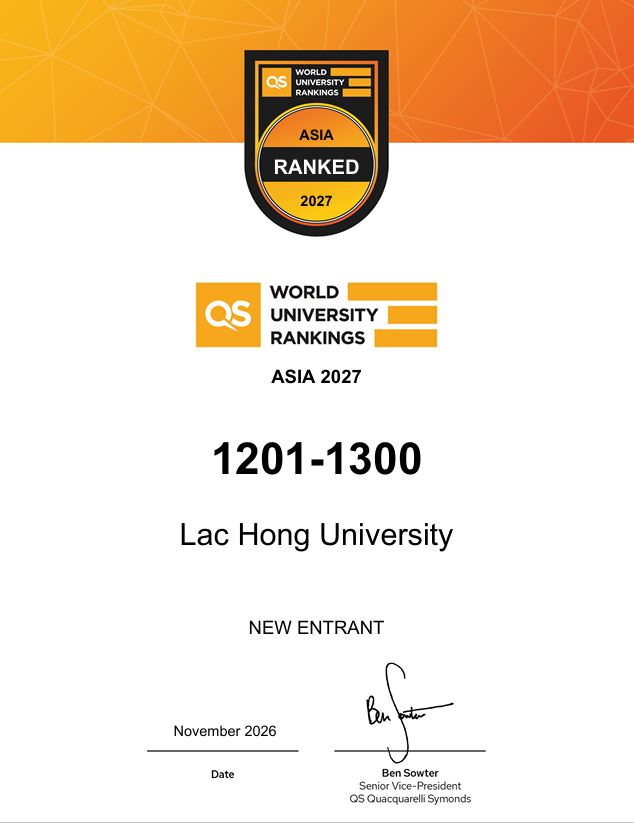
Lac Hong University (LHU) has been ranked in the QS Asia University Rankings for the first time,
securing a place in the 1201–1300 ranking band among Asian universities.
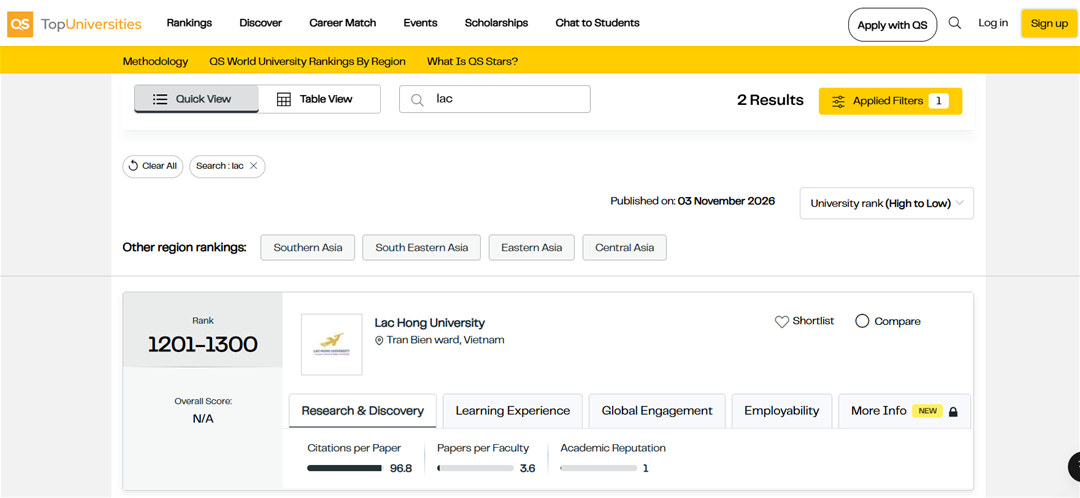
This year, Lac Hong University (LHU) participated in the QS Asia University Rankings for the first time and was placed in the 1201–1300 ranking band among Asian universities. For LHU, this result provides an initial reference point for international benchmarking. It also offers additional data to help the University review its improvement priorities and develop its internationalisation strategy in the coming years.
University Rankings as part of LHU's internationalisation strategy
At LHU, internationalisation is an ongoing process that involves education, research, faculty development, quality assurance, and stronger partnerships with universities, organisations, and businesses abroad.
International benchmarking supports this process by helping the University assess how well its teaching and research activities are connected to international standards and practices. It also helps LHU evaluate its engagement with global academic networks and identify the conditions needed to develop a more international learning environment.
Participation in the QS Asia University Rankings forms part of LHU's broader internationalisation efforts. The ranking indicators and benchmarking data help the University identify areas of positive performance, recognise gaps that need to be addressed, and determine priorities for future investment and development.
Benefits of internationalisation for students
For students, the value of internationalisation should be reflected in practical learning opportunities and meaningful experiences. By expanding its international partnerships and academic networks, LHU aims to create more opportunities for students to participate in student exchange programmes, academic exchanges, intercultural activities, industry collaboration programmes, and projects involving international partners. An international learning environment also helps students develop foreign language skills, intercultural communication skills, professional competencies, and the ability to adapt to diverse working environments.
From this perspective, internationalisation brings real value when the University's partnerships and collaborative activities lead to accessible opportunities for students to learn, gain practical experience, and prepare for their future careers.
Benefits of internationalisation for faculty members
For faculty members, internationalisation creates more opportunities for academic collaboration and research development. Faculty members can connect with international colleagues and research teams, participate in joint research projects, publish academic papers, engage in academic exchanges, develop academic programmes, and contribute to collaborative projects.
These international connections also encourage the sharing of knowledge, professional experience, and good practices. By applying insights gained through international cooperation to teaching and research activities at LHU, faculty members can contribute to improving the learning environment and educational experience for students.
Using University Ranking results for continuous quality improvement
LHU views participation in international university rankings as an opportunity for benchmarking and evidence-based quality improvement. Therefore, its initial placement in the 1201–1300 ranking band serves as a starting point for further data analysis and performance monitoring in the coming years. The value of participating in university rankings lies not only in the ranking position itself but also in how the University uses benchmarking results to improve educational quality, strengthen research activities, expand international cooperation, and create more opportunities for students and faculty members.
Through this approach, participation in the QS Asia University Rankings forms part of LHU's ongoing efforts to learn from other institutions, compare performance, and pursue continuous improvement.
These efforts reflect the University's commitment to building a more open and internationally connected educational environment while strengthening its engagement with the regional and global higher education community.
QS World University Rankings by Region # Regional rankings

